

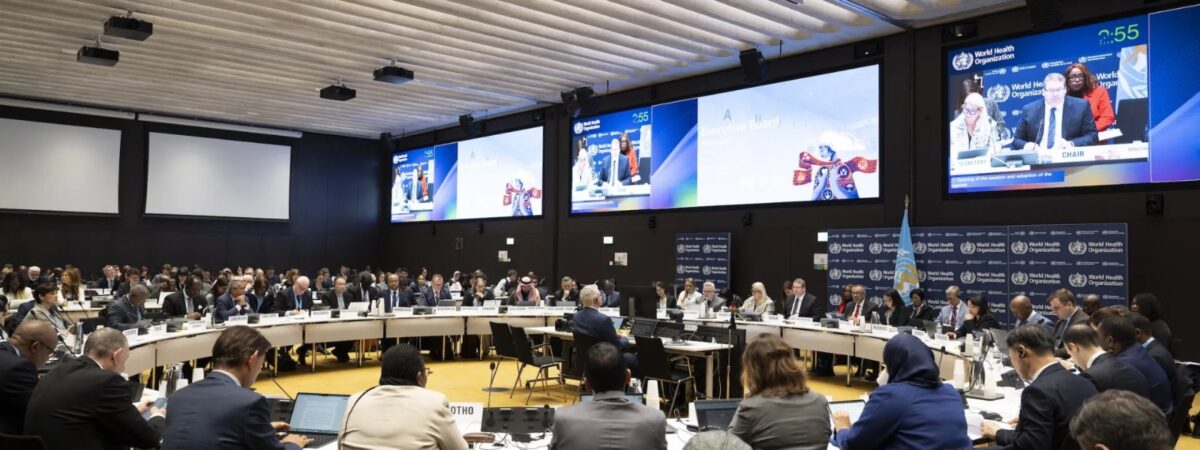
The 158th session of the WHO Executive Board (EB158) took place from February 2 to February 7, 2026 at WHO Headquarters in Geneva, Switzerland.
From WPA’s perspective, EB158 reinforced important priorities that matter to patients everywhere: stronger action on chronic diseases, universal health coverage anchored in primary health care, safer and more resilient health systems, and more accountable global health governance. Below are EB158 decisions and discussions that matter most for patients:
Part I: Clinical & Policy Priorities
1. A Broader NCD Agenda: Liver Disease & Bleeding Disorders
The Executive Board (EB) moved to expand the practical scope of the NCD response beyond the traditional “4×4" framework (heart disease, cancer, diabetes, respiratory disease).
Steatotic Liver Disease (SLD): The Board adopted Resolution EB158.R1, formally recognizing SLD (formerly fatty liver disease) as a “missing piece" of the global NCD response. Member States acknowledged that SLD is driven by the same metabolic risk factors as diabetes and obesity yet often falls through the cracks of national health plans.
Bleeding Disorders: In a landmark decision (EB158(2)), the Board mandated global action on haemophilia. The debate highlighted a stark inequity: patients globally lack adequate treatment.
Health-Harming Industry Influence: During discussions on the UN Political Declaration on NCDs, tensions flared regarding corporate determinants of health. Civil society organizations (including the NCD Alliance) delivered sharp interventions criticizing the “significant influence of health-harming industries" in weakening global targets on health taxes and fossil fuels.
For WPA, these outcomes are positive, but delivery will determine real impact.
Integrated, not siloed: The SLD resolution signals that metabolic conditions must be addressed as connected risks. WPA supports practical integration in national NCD pathways, so liver health is considered within broader metabolic risk management, alongside diabetes and obesity.
Equitable access to essential care: EB158(2) highlights the access gap for haemophilia and other bleeding disorders. WPA supports equitable availability of diagnosis and essential treatments within national benefit packages, with a clear focus on affordability, continuity of supply, and quality standards.
Meaningful protection from commercial influence: WPA aligns with civil society calls for NCD policy to remain evidence-led and rights based. Implementation of the Political Declaration should be protected from the influence of health-harming industries, including where conflicts of interest may weaken prevention measures.
2. UHC Anchored in Primary Health Care
Discussions on Agenda Item 9 (Universal Health Coverage) and Agenda Item 10 (Primary Health Care) carried a clear sense of urgency. The EB158 documentation reinforced a consistent message: progress towards UHC remains off track, and many people continue to face financial hardship when accessing care, including through out-of-pocket payments.
Strengthening PHC as the foundation for UHC: Discussions reinforced Primary Health Care (PHC) as the core approach for advancing UHC, with a focus on stronger first-contact services, better coordination across levels of care, and more people-centred service delivery. Delegations emphasized the need for PHC that can provide prevention and routine services, ensure early detection and ongoing management of chronic conditions, and coordinate referrals and follow-up across the health system.
The road to 2027: The upcoming 2027 UN High-Level Meeting on UHC was referenced as an important moment in the global UHC agenda. Discussion signalled the value of using the lead-up period to strengthen national implementation, track progress, and maintain political focus on UHC and PHC delivery.
For WPA, this policy focus on PHC is welcome, but it must translate into the operating layer of the patient experience.
Continuity, not fragmentation: A stronger PHC foundation can improve continuity of care for patients living with multiple conditions. It should mean one coordinated care pathway, clear referrals, and follow-up that is managed across services, instead of disconnected visits and repeated tests.
Financial protection is non-negotiable: The continuing recognition of financial hardship is a call to action. WPA’s position is clear: UHC is not credible if patients are pushed into hardship to access essential services. Coverage must translate into affordable access at the point of care, including essential diagnostics and medicines, starting at the primary level.
3. A Push for Safer, More Reliable Frontline Care
Discussions on health system resilience moved from broad policy intent to delivery realities at the frontline.
The “ECO” Strategy: A central focus was the Board’s consideration of the Draft Global Strategy for Integrated Emergency, Critical and Operative Care (2026–2035). Discussion reinforced a core system message: a significant burden of avoidable death and disability is linked to failures in timely delivery of essential emergency, critical and operative care, including basics such as triage, oxygen, safe surgery, and effective referral pathways. Quality and continuity alongside coverage: During debates linked to Primary Health Care (Agenda Item 10), the importance of quality and continuity was repeatedly reinforced. The discussion highlighted that service interruptions, whether linked to workforce constraints, supply chain breaks, or wider system pressures, undermine outcomes and weaken public trust. The emphasis was on strengthening dependable, people-centred services that function when patients need them.
For WPA, this focus on frontline readiness reflects the real patient experience. Safety is determined at the point of care.
Beyond “access” to “readiness”: We welcome the strategy on emergency, critical and operative care. For conditions like stroke, complicated childbirth, or road trauma, delays are decisive. WPA supports clear national measures of readiness and timely response across the care pathway, including referral and follow-up, not only nominal “access” on paper.
The human factor: Safe care depends on a supported workforce. WPA’s patient safety messaging continues to link quality of care to workforce capacity and working conditions, because fatigue, burnout, and inadequate support increase risk at the bedside.
Accountability at the point of care: We support stronger, integrated clinical governance that improves quality assurance across settings. Patients should be able to expect consistent minimum standards, transparent monitoring, and clear accountability whether they attend a rural clinic or an urban hospital.
4. Fake and Falsified Medical Products: A Triple Threat
Discussions under Agenda Item 12 (Substandard and Falsified Medical Products) reinforced how the challenge is evolving with more complex supply chains and new sales channels.
The digital front: Member States raised concerns about the growth of unregulated online pharmacies and sales through digital platforms, including social media. The Board reviewed the report of the Member State Mechanism (MSM), which highlights the expanding role of internet-enabled channels in enabling falsified medical products to bypass traditional regulatory controls.
Governance reform: The Board supported efforts to streamline the MSM’s operations by consolidating its work into three focused workstreams, replacing a more fragmented structure. The intent is to improve coordination and make implementation more efficient and responsive.
The affordability and access link: Delegations also highlighted that access barriers, particularly high prices, limited availability, and stock-outs, can push patients toward informal markets where falsified products circulate. The discussion reinforced that enforcement is necessary, but it must be complemented by measures that improve access to quality-assured, affordable medical products through legitimate supply systems.
For WPA, this agenda item confirms that falsified medical products are not only a criminal issue. They are a direct patient safety and access issue.
Affordability supports safety: We support the emphasis on addressing access barriers as part of the response. When essential products are unaffordable or unavailable, patients face higher exposure to unsafe markets. WPA will advocate for practical measures that improve affordability and availability of quality-assured products, alongside stronger regulation and enforcement.
Safer online access: As medicine purchasing and health information move online, patients need clearer ways to confirm legitimate sources. WPA supports accelerated implementation of the MSM’s work on internet sales and stronger visibility for verified, regulated online pharmacies, supported by clear public guidance and cross-border cooperation.
Meaningful patient input: WPA supports structured engagement with civil society and affected communities so that real world patient harm informs prevention, reporting, and risk communication. People harmed by falsified products should inform how systems identify risks, warn the public, and strengthen safeguards.
5. AMR and Access: Technology Transfer and Equity in Implementation
Discussions under Agenda Item 14 covered the Draft updated global action plan on antimicrobial resistance (AMR) 2026–2036, developed with the Quadripartite alliance and in consultation with Member States and stakeholders.
While there was broad support for the overall AMR direction and the One Health approach, discussions showed differences in Member State views on how access to medical tools should be addressed, including the issue of technology transfer.
To manage these differences and keep the process moving, the Executive Board agreed that informal consultations would continue, specifically on voluntary and mutually agreed technology transfer, facilitated by the Secretariat in an inclusive and transparent manner before WHA79, with a view to submitting a draft decision to the Health Assembly.
For WPA, the EB158 discussion reinforces a practical patient reality: AMR strategies must protect health outcomes, not only policy objectives.
Stewardship and access must move together: Stewardship remains essential, but implementation must also ensure patients can access quality-assured diagnostics and effective treatment when clinically needed, especially in low-resource settings.
Access should be defined in real-world terms: Access is not only whether a product exists. It is whether it is available, affordable, and reliably delivered through legitimate systems, including last-mile delivery and continuity of supply.
Equity in implementation: As consultations continue toward WHA79, WPA supports a final approach that strengthens equitable access without undermining responsible use, and that recognises the needs of underserved communities in implementation planning.
6. Health Workforce Migration: Ethics, Safeguards, and Fair Deals
Discussions under Agenda Item 13 (Report of the Expert Advisory Group on the Code of Practice) highlighted the ongoing tension between countries facing health worker shortages and countries experiencing sustained outflows of trained personnel.
Co-investment and shared responsibility: A key theme was the need for stronger implementation of the WHO Global Code of Practice, including ethical international recruitment and more effective support for health workforce sustainability in source countries. The discussion recognised that international recruitment can shift the costs and burdens of education and training onto lower-resourced systems, and that fair approaches should include measures that strengthen domestic education and workforce retention.
The Safeguards List: There was focused discussion on the WHO Health Workforce Support and Safeguards List, which includes 55 countries. The shared position reflected in WHO guidance is that active international recruitment from these countries should be discouraged, with any recruitment expected to align with ethical standards and appropriate safeguards.
Government-to-government agreements: Discussion also noted the role of bilateral, government-to-government arrangements. Delegations emphasised the importance of transparency, fairness, and mutual benefit, including clarity on what support or capacity-strengthening measures are included for source countries.
The Outcome: In Decision EB158(7), the Board agreed to proceed with a new round of Member State-led informal consultations to continue work on the Code of Practice and related implementation issues.
WPA rejects the view that health workers are commodities in a global market. Workforce stability is a core component of patient safety and continuity of care.
Staffing is safety: Evidence from health systems and nursing research consistently links workforce shortages and unsafe staffing levels with poorer patient outcomes. For patients, shortages translate into delays, reduced monitoring, missed care steps, and avoidable harm. WPA’s position is that recruitment from fragile systems must be assessed not only as a labour issue, but also through a patient safety lens.
The rural penalty: Migration and maldistribution rarely affect all communities equally. Rural and underserved areas are often hit first when specialist capacity or experienced staff leave. WPA supports approaches that strengthen training, retention, and replacement capacity in the communities most affected, so service access does not collapse where needs are already highest.
Ethical agreements: WPA calls for transparent, genuinely mutual benefit government-to-government agreements. Communities in source countries should be able to see what protections and reinvestment measures are in place to sustain local services when health workers are recruited abroad.
7. “Economics of Health for All”: A Financing Lens Patients Can Use
Discussions under Agenda Item 26 considered the Draft strategy on the economics of health for all. The strategy draws on the work of the WHO Council on the Economics of Health for All.
Investment, not cost: The strategy reinforces a core message: spending on health should be treated as a productive investment that supports social and economic outcomes, not only as a short-term cost item.
Fiscal space and macroeconomic constraints: The discussion recognised that many countries face limited fiscal space and wider economic pressures that affect the ability to sustain and expand health spending. The strategy highlights the importance of addressing these constraints through whole-of-government approaches.
Engaging beyond the health sector: The strategy supports stronger engagement with economic and financial policy actors. It positions WHO’s role as supporting Member States to align economic, fiscal, and health policies so progress towards Health for All is feasible and sustained.
For WPA, this agenda is not abstract. It links directly to access, affordability, and financial protection.
From framing to financial protection: We welcome the investment approach, but patients feel progress through reduced financial hardship. WPA supports this agenda but with practical outcomes such as lower out-of-pocket spending for essential care.
Protecting essential services: When health budgets are constrained, patients experience it first through delays, stock-outs, and reduced service availability. WPA supports for decisions that protect essential services and strengthen delivery at the point of care.
Valuing what matters: The strategy’s focus on “valuing health for all” aligns with patient priorities. Success should be visible in fewer preventable deaths, safer care, and fewer households pushed into hardship due to health costs.
Part II: System-Wide Issues That Shape Delivery
8. WHO Financing: Constraints and Operational Impact
Discussions under Agenda Item 4 (Report of the PBAC) and Agenda Item 33 (Financing and implementation) reinforced that WHO is operating in a constrained financing environment, with a strong focus on aligning commitments with available resources.
Investment Round and remaining gap: The Secretariat reported on the outcomes of WHO’s first Investment Round and noted that the 2026–2027 base budget is not yet fully financed. The discussion highlighted that closing remaining gaps will require sustained Member State engagement and continued efforts to broaden and stabilise funding.
Prioritisation and organisational realignment: WHO reported that it is undertaking prioritisation and realignment to manage delivery within available resources. The discussion recognised that organisational adjustments may be required to protect core functions and maintain delivery of priority work.
Earmarking and limited flexibility: A key structural issue raised was the high proportion of earmarked voluntary contributions, which limits WHO’s ability to allocate resources flexibly across programmes. The discussion reflected concern that uneven funding can leave essential cross-cutting and normative work under-resourced, even where Member State expectations remain high.
For WPA, WHO financing decisions are not abstract. They shape the reliability of global guidance, standards, and support that patients ultimately depend on.
The cost of fragmentation: Highly earmarked funding can create uneven capacity across WHO’s work. WPA supports stronger levels of flexible financing so WHO can sustain core functions that support patient safety, quality improvement, and guidance development across disease areas.
Normative work must be protected: Patients rely on WHO’s normative role, setting standards, issuing technical guidance, and supporting safe, effective service delivery. WPA will support approaches that protect technical capacity and continuity of this work, even during periods of internal adjustment.
Implementation over unfunded mandates: We align with PBAC’s emphasis on realism and deliverability. New commitments must be matched by credible financing and implementation planning. Patients benefit most when existing decisions are properly resourced and executed, not when additional commitments are made without funding to deliver them.
9. Health Emergencies: Funding Shortfalls and the 2026 Outlook
Discussions under Agenda Item 16 (Update on major ongoing health emergencies) highlighted the operational impact of sustained funding shortfalls on health services in humanitarian settings. The Secretariat’s reporting underscored that reduced financing has forced difficult prioritisation decisions and has contributed to disruption of essential service delivery in multiple emergency contexts.
Prioritisation under constrained resources: WHO reported that, due to funding and liquidity pressures, emergency operations have had to focus on the most life-saving interventions. The discussion reflected concern that where resources are insufficient, services outside the most critical response package can be reduced or paused, even when needs remain high.
Impact on vulnerable groups and essential supplies: The Secretariat noted that service disruptions can disproportionately affect vulnerable populations and can undermine access to essential commodities, including mental health and psychosocial support inputs. Member States emphasised the importance of protecting continuity of essential services within emergency responses.
2026 appeal and sustaining response capacity: The discussion linked the funding gap to the broader need for sustained support for WHO’s emergency work. WHO’s emergency appeal approach and financing needs were referenced in the context of maintaining response capacity across multiple concurrent emergencies, and preventing further erosion of health service delivery.
For WPA, continuity of care is often the first casualty when emergency financing becomes uncertain.
Continuity is part of life-saving care: Prioritisation is unavoidable in crises, but patients with chronic conditions and mental health needs cannot simply pause treatment. WPA will continue to advocate for emergency responses that protect continuity of essential care alongside acute interventions.
Predictable financing protects patients: When funding is short-term and fragmented, services can scale up and down abruptly. Patients experience this as closed clinics, interrupted treatment, and loss of trust. WPA supports more predictable and flexible financing that keeps essential services functioning through protracted crises.
Local delivery matters: WPA supports strong local partnerships as part of effective emergency response. Community and national organisations are often closest to affected populations. We will encourage transparency on how resources reach frontline delivery and how local capacity is strengthened.
10. Pandemic Preparedness: Completing the PABS System
Discussions under Agenda Item 6 (Follow-up to the Pandemic Agreement) focused on the continuing intergovernmental work needed to operationalise the Agreement, with particular attention to the Pathogen Access and Benefit-Sharing (PABS) System under Article 12.
PABS as a central outstanding element: The session reflected that the Pandemic Agreement’s effectiveness depends on completing the PABS arrangements. Member States and the Secretariat emphasised the need to finalise the PABS annex and related operational details so the Agreement can function in practice.
Balancing access and benefit sharing: Discussions reflected ongoing differences in Member State positions on how to balance expectations for pathogen access (including sharing of relevant samples and information) with benefit sharing. Equity considerations remained central to these discussions.
Operational and technical questions: Technical work continues on how PABS would operate, including issues linked to transparency, traceability, and the use of genetic sequence information. The discussion also reflected attention to how benefit-sharing obligations would be implemented in practice across relevant actors.
For WPA, the PABS system is directly linked to whether pandemic preparedness delivers equitable outcomes for patients.
Equity must be operational, not aspirational: WPA supports approaches that translate equity principles into practical arrangements that patients can experience during a crisis, including fair and timely access to essential countermeasures.
Trust depends on fairness: Surveillance, testing, and data-sharing rely on public trust. WPA’s position is that trust is strengthened when people see that participation in surveillance systems is linked to meaningful protection and fair outcomes across countries and communities.
Patient-centred accountability: WPA supports encouraging transparency in how the PABS system is implemented, including clarity on responsibilities, monitoring, and how benefit sharing reaches populations most at risk.
Part III: Governance & Participation
11. Global Health Architecture: Alignment, Transparency, and Participation
Discussions under Agenda Item 29.1 (Reform of the global health architecture) reflected sustained concern about fragmentation and the proliferation of parallel initiatives in global health. Member States highlighted the need for stronger coherence so that new and existing processes reinforce, rather than dilute, WHO’s coordinating role and governing-body leadership.
A mandate for alignment: Under Decision EB158(20), the Executive Board requested the Director-General to develop a joint, transparent and inclusive process under WHO leadership. The intent is to improve coherence across reform-related discussions and ensure that relevant initiatives are connected to WHO’s established governance structures.
Transparency and full Member State engagement: The discussion emphasised that reform work should be conducted through open and inclusive Member State processes. The importance of ensuring broad participation,across all regions and income groups,was reinforced as a core safeguard for legitimacy and accountability.
Reducing duplication and transaction costs: Member States noted that multiple uncoordinated initiatives can create duplication and added administrative burden for countries. The reform agenda highlighted the value of convergence and simplification so national authorities can focus more on delivery and less on navigating overlapping reporting and coordination demands.
For WPA, governance reform matters only if it strengthens real-world delivery and improves outcomes for people.
Alignment should support integrated care: WPA supports efforts to reduce fragmentation in global health decision-making. When priorities and financing are better aligned, countries are better positioned to plan and deliver services in a more integrated way across disease areas and population needs.
Inclusion must extend beyond governments: We note the emphasis on inclusivity in reform discussions. WPA encourages structured engagement of civil society and patient organisations, so that lived experience informs reform priorities, implementation realities, and accountability.
Accountability for impact: WPA will watch reform discussions closely to ensure that efficiency and coordination improvements translate into stronger delivery capacity and better patient outcomes. Streamlining should strengthen effectiveness and follow-through, not reduce ambition or weaken support where health needs remain high.
12. Civil Society Space: Engagement with Non-State Actors (FENSA)
Discussions under Agenda Item 28.6 (Engagement with non-State actors) highlighted the political sensitivity surrounding WHO’s engagement with civil society and other non-State actors under the Framework of Engagement with Non-State Actors (FENSA).
Renewal of official relations: The Executive Board considered a large number of renewals of official relations. While such renewals are often procedural, the discussion at EB158 required extended consideration, reflecting differing Member State views on the scope and nature of engagement with certain non-State actors.
Reaffirmation of Member State sovereignty: To conclude the item, the Board adopted Decision EB158(23). The decision reaffirmed that WHO’s engagement with non-State actors does not affect the sovereign rights of Member States with respect to activities conducted within their national territories. This clarification was included to address concerns raised during the discussion, while maintaining the integrity of WHO’s global accreditation and engagement processes under FENSA.
New official relations: During the same agenda item, the Board approved new official relations with additional non-State actors, including a private sector federation active in the area of physical activity. This decision took place within the existing FENSA framework, which requires due diligence and ongoing management of potential conflicts of interest.
For WPA, engagement with non-State actors is central to ensuring that global health governance reflects real-world needs and experiences.
Protecting meaningful civil society engagement: WPA supports transparent and predictable processes for engagement with civil society organisations. Clear and consistent application of FENSA helps ensure that patient voices and community expertise can contribute constructively to WHO’s work.
Balancing engagement and safeguards: We recognise the importance of engaging a wide range of partners, including the private sector, where this supports public health goals. At the same time, robust safeguards against conflicts of interest remain essential to protect public trust and patient interests.
Inclusivity as a strength: WPA will continue to encourage inclusive engagement that allows civil society and patient organisations to contribute to WHO’s technical and normative work, while respecting the governance roles of Member States and the principles set out in FENSA.