

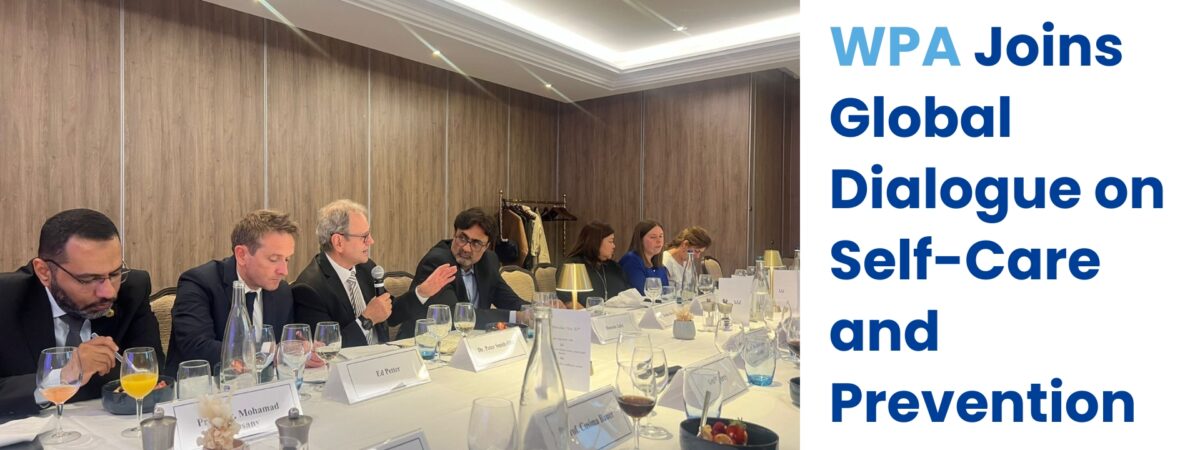
WPA participated in the Global Self-Care Federation’s High-Level Roundtable Dinner, Unlocking the Power of Prevention: Self-Care for Sustainable Health Systems, held on 20 May 2026 in Geneva.
The roundtable brought together policymakers, health experts, and global health stakeholders to discuss how responsible self-care can strengthen prevention, support universal health coverage, and reduce pressure on overstretched health systems.
Representing WPA at the event, Dr. Hussain Jafri, CEO of World Patients Alliance, contributed the patient perspective during the discussions and emphasized that as noncommunicable diseases and chronic conditions continue to rise, alongside severe shortages in healthcare providers, patients cannot remain passive recipients of care. With the right tools, trusted information, and professional support, patients can become active partners in prevention, early intervention, and long-term disease management.
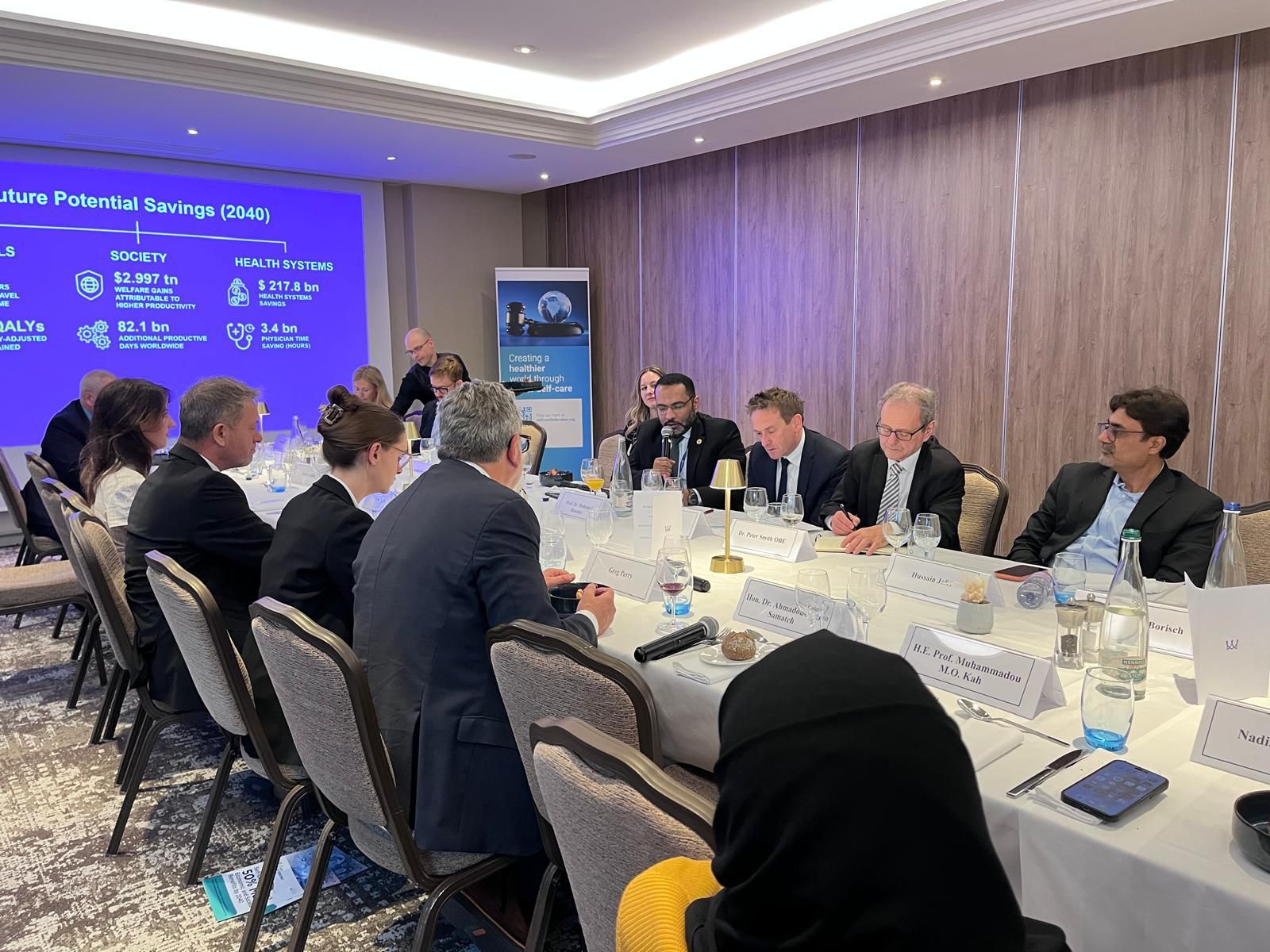
During the meeting, findings a recent GSCF socio-economic research report, highlighted the growing importance and measurable impact of self-care globally.
According to the report, self-care currently contributes to:
– $144 billion in annual health system savings globally
– 2.20 billion hours of physician time saved annually
– 43.6 billion additional productive days worldwide
– 24 million quality-adjusted life years (QALYs) gained
– and could unlock up to 50% more economic and societal benefits by 2040 if supported by appropriate policies and investments.
Dr. Jafri stressed that self-care must be patient-centered, not system-centered. Self-care should not become a mechanism for shifting the burden of care from health systems onto patients.
Instead, patients must be adequately supported through health literacy, evidence based information, affordable and quality assured self-care interventions, digital inclusion, and guidance from pharmacists and healthcare professionals.
Equity was also highlighted as a central priority during the discussions.
WPA noted that self-care opportunities are not equally distributed, with vulnerable populations often facing low health literacy, financial barriers, limited access to medicines, digital exclusion, and misinformation.
A self-care agenda that does not prioritize equity risks benefiting only those who already have access to resources, services, and health knowledge.
WPA also called for patient organizations to be recognized as essential partners in self-care policy and practice.
Patient organizations should not only be consulted at the end of the process, but actively involved in codesigning prevention campaigns, self-care strategies, health literacy programs, digital health tools, product development, and regulatory and policy frameworks.
From the patient perspective, self-care is not simply about individual responsibility; it is about empowerment, access, dignity, and partnership within healthcare systems.
As emphasized by Dr. Jafri during the roundtable discussion:
“Nothing about self-care should be designed without patients at the table.”