- (000) 123 458 789
- office@worldpatientsalliance.org


WHAT IS DIABETES?
Diabetes is a chronic (long-lasting) disease that affects how your body turns food into energy.
Most of the food you eat is broken down into sugar (called glucose) and released into your bloodstream. Your body uses this sugar for energy.
Your pancreas makes a hormone called insulin. Insulin helps move sugar from your blood into your body’s cells, where it is used for energy. It also helps keep your blood sugar at a healthy level.
If you have diabetes, your body either does not make enough insulin or cannot use it properly. As a result, too much sugar stays in your blood. Over time, this can lead to serious health problems such as heart disease, vision loss and kidney disease.
TYPES OF DIABETES
There are two main types of diabetes: Type 1 diabetes and Type 2 diabetes.
TYPE 1 DIABETES
Type 1 diabetes is a chronic condition in which the body does not produce insulin.
Normally, the pancreas makes insulin to help sugar (glucose) move from the blood into the body’s cells for energy. In people with type 1 diabetes, the body’s immune system attacks and destroys the cells in the pancreas that make insulin.
Because the body cannot make insulin, sugar builds up in the bloodstream instead of being used for energy.
People with type 1 diabetes need to take insulin every day to stay healthy. Without insulin, blood sugar levels can become dangerously high.
Type 1 diabetes usually develops in children or young people, but it can occur at any age. It is not caused by lifestyle or diet and cannot be prevented. About 5% of people with diabetes have type 1.
TYPE 2 DIABETES
Type 2 diabetes is a chronic condition in which the body does not use insulin properly or does not make enough insulin.
Normally, insulin helps sugar (glucose) move from the blood into the body’s cells for energy. In type 2 diabetes, the body becomes resistant to insulin, meaning the cells do not respond to it as they should.
As a result, sugar builds up in the bloodstream instead of being used for energy.
Type 2 diabetes is the most common type of diabetes. About 9 in 10 people with diabetes have this form. It usually develops slowly over time and is most often diagnosed in adults, but it is becoming more common in children, teenagers and young adults.
It is often linked to factors such as being overweight, lack of physical activity, and family history. In many cases, type 2 diabetes can be prevented or delayed through healthy lifestyle changes such as eating a balanced diet, staying active and maintaining a healthy weight.
WHAT IS PREDIABETES?
Prediabetes is a serious health condition where blood sugar levels are higher than normal, but not yet high enough to be diagnosed as type 2 diabetes.
It happens when the body starts to have trouble using insulin properly. Insulin is a hormone that helps move sugar (glucose) from the blood into the body’s cells to be used for energy. In prediabetes, the body still makes insulin, but it does not work as well as it should, so sugar begins to build up in the blood.
Prediabetes often develops slowly over time and most people do not have any symptoms, so they may not know they have it.
Prediabetes increases the risk of developing type 2 diabetes, heart disease, and stroke. It is a warning sign that the body is starting to have trouble controlling blood sugar.
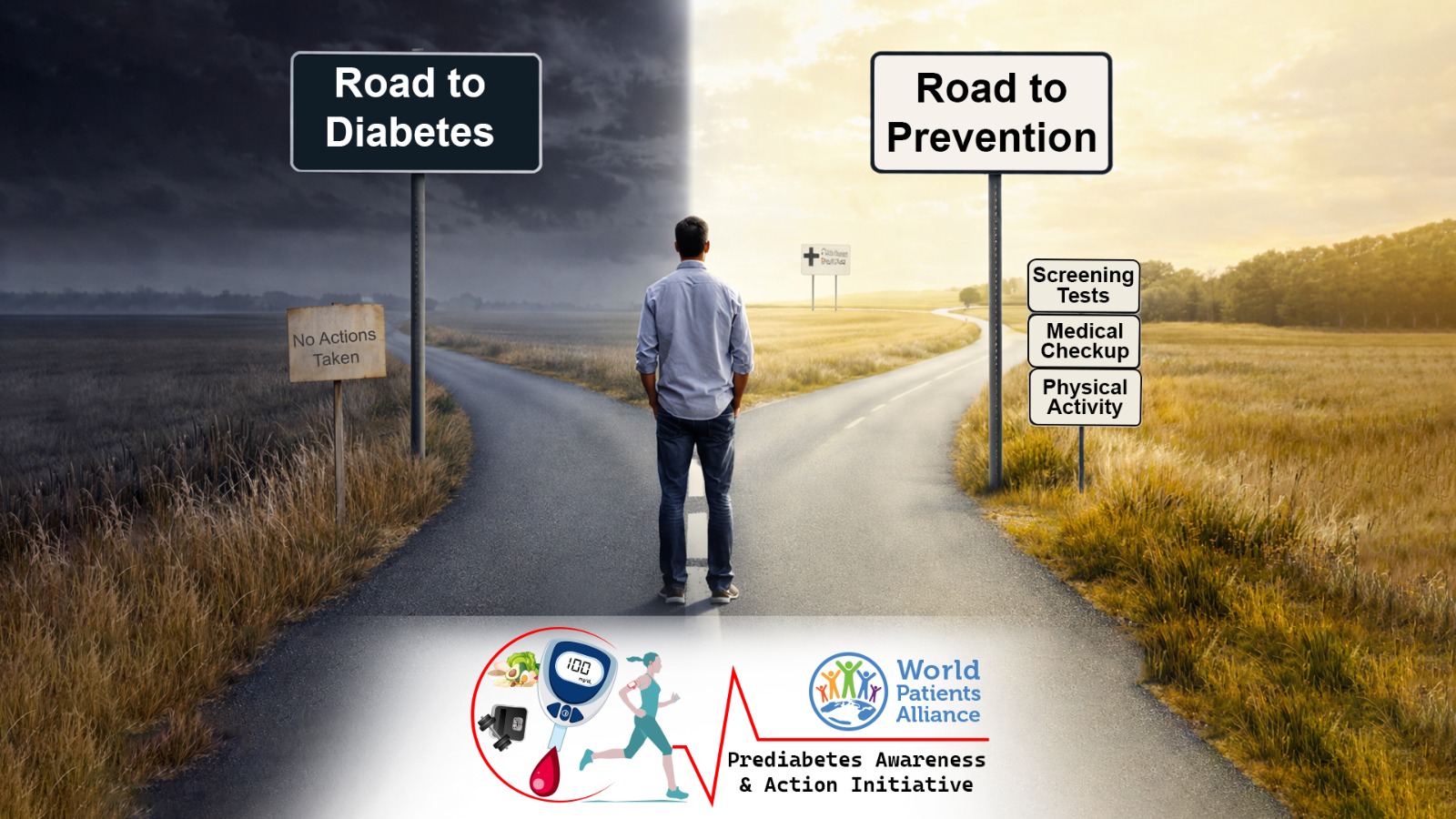
The good news is that prediabetes can often be prevented or reversed through healthy lifestyle changes, such as eating a balanced diet, being physically active, maintaining a healthy weight and getting enough sleep.
The focus of this project is on Prediabetes and Type 2 Diabetes. Therefore, please click on the buttons on the right side for more information related to prevention, screening tests, warning signs, health & nutrition and much more.