

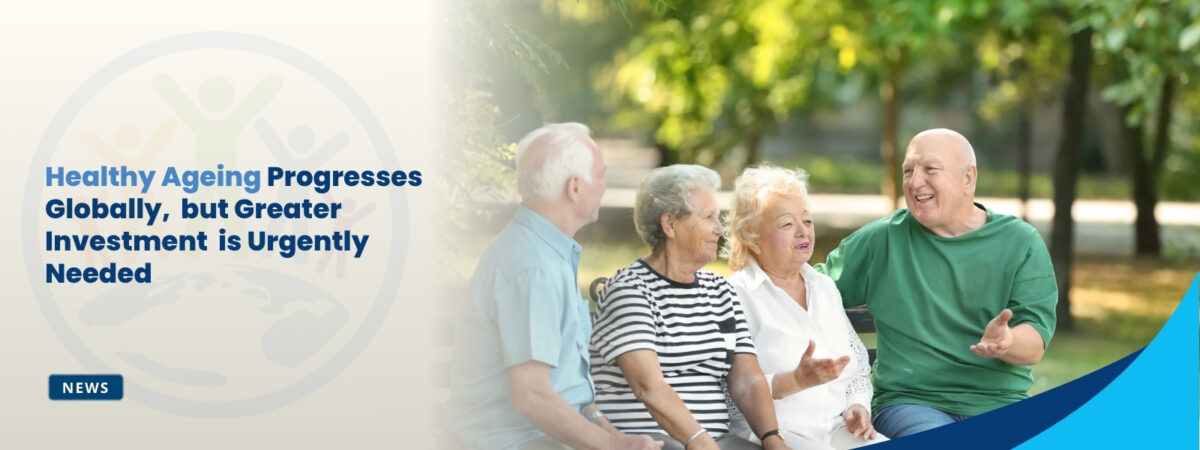
The world is ageing rapidly, with the number of people aged 60 years and over projected to reach 2.1 billion by 2050. Yet living longer does not automatically mean living healthier. The midpoint report of the UN Decade of Healthy Ageing (2021–2030) shows important progress, while also highlighting major gaps in long-term care, financing, data and support for older people.
The report, transmitted to the 81st United Nations General Assembly, shows that more countries are taking action against age discrimination and strengthening services for older people. The proportion of countries with legislation against age-based discrimination has increased to 57.7%, while 56.7% now have national long-term care policies. More countries are also developing age-friendly environments and comprehensive health and social assessments for older people.
However, progress remains uneven. More than one-third of reporting countries have very limited or no dedicated resources for long-term care, and fewer than half have legislation guaranteeing access to assistive products such as hearing aids, spectacles and mobility devices. Only 22.7% of countries are able to track the health of older people over time, limiting the ability of health systems to plan services according to their changing needs.
Putting older people at the centre
From the World Patients Alliance perspective, healthy ageing requires more than simply extending life expectancy. Older people must be able to live with dignity, independence, access to quality healthcare and appropriate long-term support.
WPA particularly supports the emphasis on listening to the experiences of older people themselves. The midpoint report incorporates input from more than 1,000 older people across 58 countries, reinforcing the importance of involving people directly affected by policies in shaping health and social care systems.
As countries enter the second half of the UN Decade of Healthy Ageing, stronger investment is needed in integrated healthcare, long-term care, assistive technologies, age-friendly communities and better health data. Equally important is ensuring that older people, families, caregivers and patient organizations are meaningfully involved in designing and evaluating these services.
WPA encourages governments and health systems to turn the commitments of the Decade into practical improvements that allow older people everywhere to live healthier, more independent and dignified lives.