- (000) 123 458 789
- office@worldpatientsalliance.org

Meet Hana Nimer | World Patients Alliance
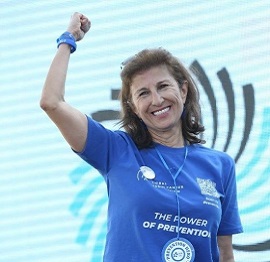 I became involved in the nonprofit sector in 2016, when I founded SAID NGO (Spreading Awareness, Increasing Detection) in Lebanon. What began as a mission to raise awareness about colorectal cancer has evolved into a broader commitment to prevention, early detection, patient support, and advocacy.
My journey is deeply personal. I lost my husband, Said, to colorectal cancer that was diagnosed too late. His experience made me realize how devastating the consequences of delayed diagnosis can be not only for patients, but also for their families.
I decided to turn this personal loss into action so that other families might be spared a similar experience. I wanted to ensure that people had access to information, screening, and support when they needed it most.
My academic background is in psychology. I graduated from the Lebanese American University as Valedictorian of the Class of 2013. Although I did not begin with formal training in nonprofit management, building SAID NGO taught me how to lead an organization, develop partnerships, advocate for policy change, and respond to the needs of patients and communities.
Much of my learning has come from listening to patients, working with healthcare professionals, and finding practical solutions to real-world challenges.
The most rewarding part is knowing that our work can make a tangible difference in someone’s life. Whether we help someone access a free screening test, navigate the healthcare system, obtain a colonoscopy, or receive essential stoma supplies, every intervention matters.
For me, success is not simply raising awareness; it is helping people move from awareness to action and ensuring they are not left alone along their cancer journey.
One of the greatest challenges is the gap between what patients need and the resources available to meet those needs. Funding is often limited, while the demand for screening, diagnosis, treatment, and ongoing support continues.
In Lebanon, economic hardship and periods of crisis have made this even more difficult. These challenges require persistence, creative partnerships, and careful use of every available resource. They also reinforce the importance of advocating for sustainable, organized healthcare services rather than relying solely on charitable initiatives.
Start by listening to the people you want to serve. Understand their needs, identify the gaps, and focus on practical solutions. You do not need to have every answer or resource from the beginning, but you do need commitment, integrity, and a willingness to collaborate.
I would also emphasize that awareness alone is not enough. We must help people overcome the barriers that prevent them from accessing care. Meaningful change happens when compassion is translated into concrete action.
I am proud that SAID NGO has grown beyond awareness to address barriers across the colorectal cancer care pathway.
We provide free F.I.T. screening throughout the year, help patients who cannot afford colonoscopies, and offer patient navigation to facilitate access to appointments and follow-up care. We also established a stoma-supply support program after learning about the difficult circumstances some patients face following surgery.
At the national level, our advocacy contributes to efforts to strengthen colorectal cancer awareness, screening, and access to care in Lebanon. I am particularly proud that our programs have evolved by listening to patients and responding to their actual needs.
Our journey has been about identifying barriers and breaking them one by one. That is the achievement that matters most to me.
Beyond my work, I am a proud mother of two sons and a daughter, and a proud grandmother of two granddaughters. My family remains an important source of joy and perspective.
My personal experience has shaped my belief that every patient is more than a diagnosis and every family deserves the opportunity to receive timely care and support.
Founding SAID NGO has given me a way to transform personal loss into a meaningful mission. I hope that, through our work, we can help prevent other families from experiencing the same loss and ensure that patients are treated with dignity, compassion, and respect.