

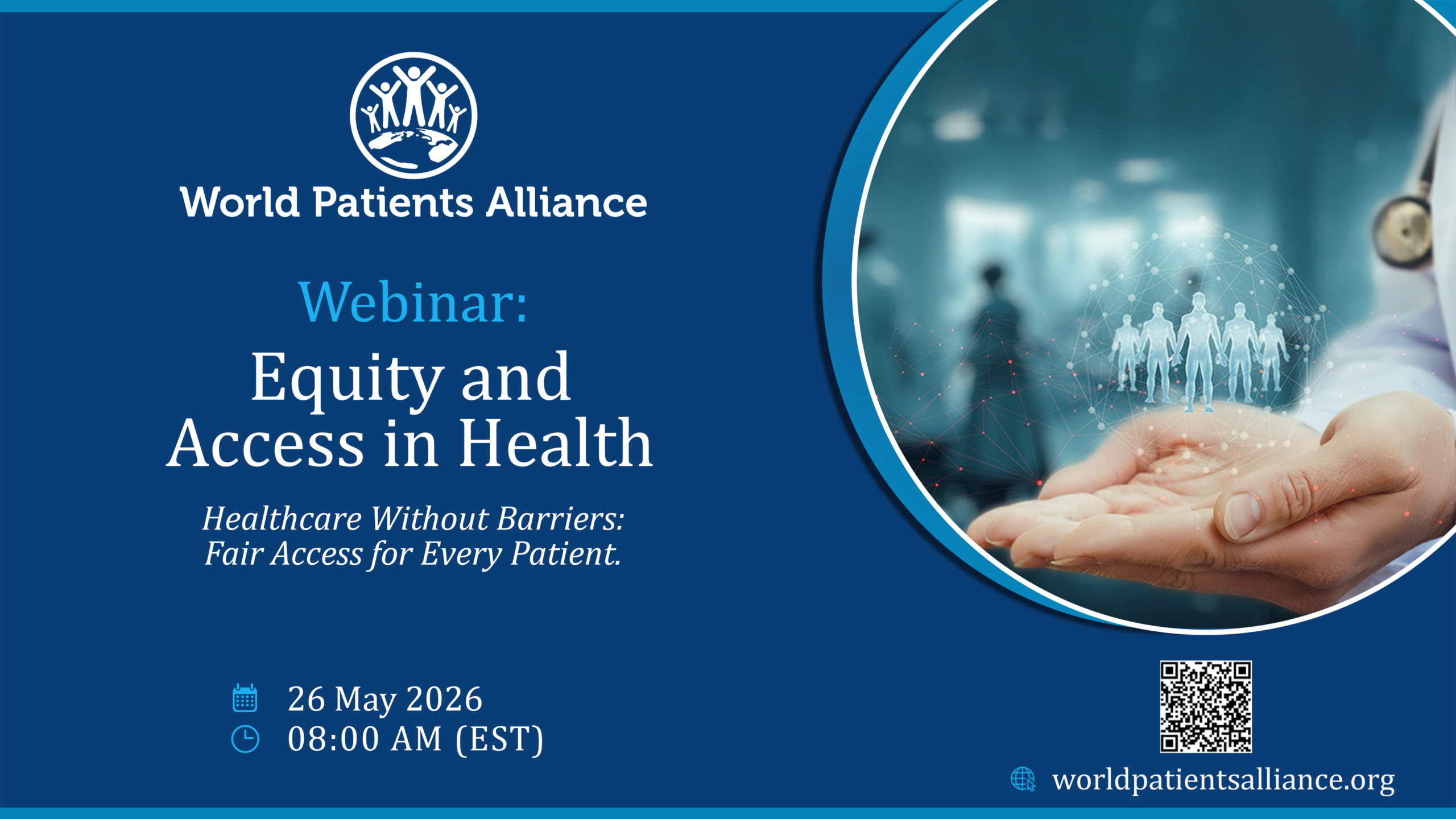
Webinar Equity and Access in Healthcare
Healthcare without barriers: Fair access for every patient.
Date: 26 May 2026
Organized by: World Patients Alliance (WPA)
Overview
The World Patients Alliance Asia Pacific Region organized the webinar “Equity and Access in Healthcare” on 26 May 2026 under the theme “Healthcare without barriers: Fair access for every patient.” The session focused on the barriers that continue to limit timely, affordable, culturally appropriate, and quality healthcare for patients across different regions.
The discussion placed patient experience at the centre of the equity agenda. It recognized that access is not limited to the presence of healthcare services. Access also depends on affordability, distance, information, trust, continuity of care, timely diagnosis, availability of medicines and diagnostics, and whether health systems are designed with patient input.
The webinar brought together WPA leadership, public health and community-engagement expert, patient advocates, and healthcare leaders. Speakers discussed how patients and patient organizations can help identify barriers, generate evidence, support peer networks, engage communities, and work with health authorities to strengthen fairness and accountability in healthcare delivery.
Objectives of the Webinar
– Highlight the main equity and access challenges experienced by patients, with attention to the Asia Pacific region and wider global relevance.
– Explain the difference between equality and equity, and why equitable healthcare requires support based on patient needs and circumstances.
– Identify practical barriers to care, including cost, distance, language, system complexity, lack of information, shortage of specialists, and limited trust.
– Show how patient organizations identify barriers, collect patient insights, provide peer support, and generate evidence for service and policy improvement.
– Present examples of patient-led action that can strengthen access, accountability, timely diagnosis, and continuity of care.
– Encourage patient groups to advance equitable access through advocacy, community engagement, collaboration, and practical system-level dialogue.
Agenda
Welcome and Opening Remarks
Andrew Spiegel | Chair, Board of Directors | WPA
Equity and Access in Healthcare, an Overview
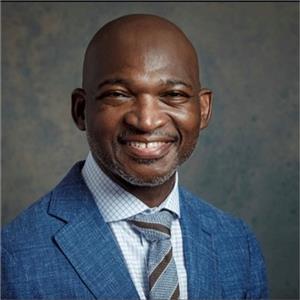
Dr. Karriem Watson | Research Associate Professor University of Illinois
Panel Discussion
Moderator:
Edmund Lau I WPA Advisory Board Member
Panelists:
Sangeeta Wadhwa | President, Youth Thalassemia Alliance (YTA)
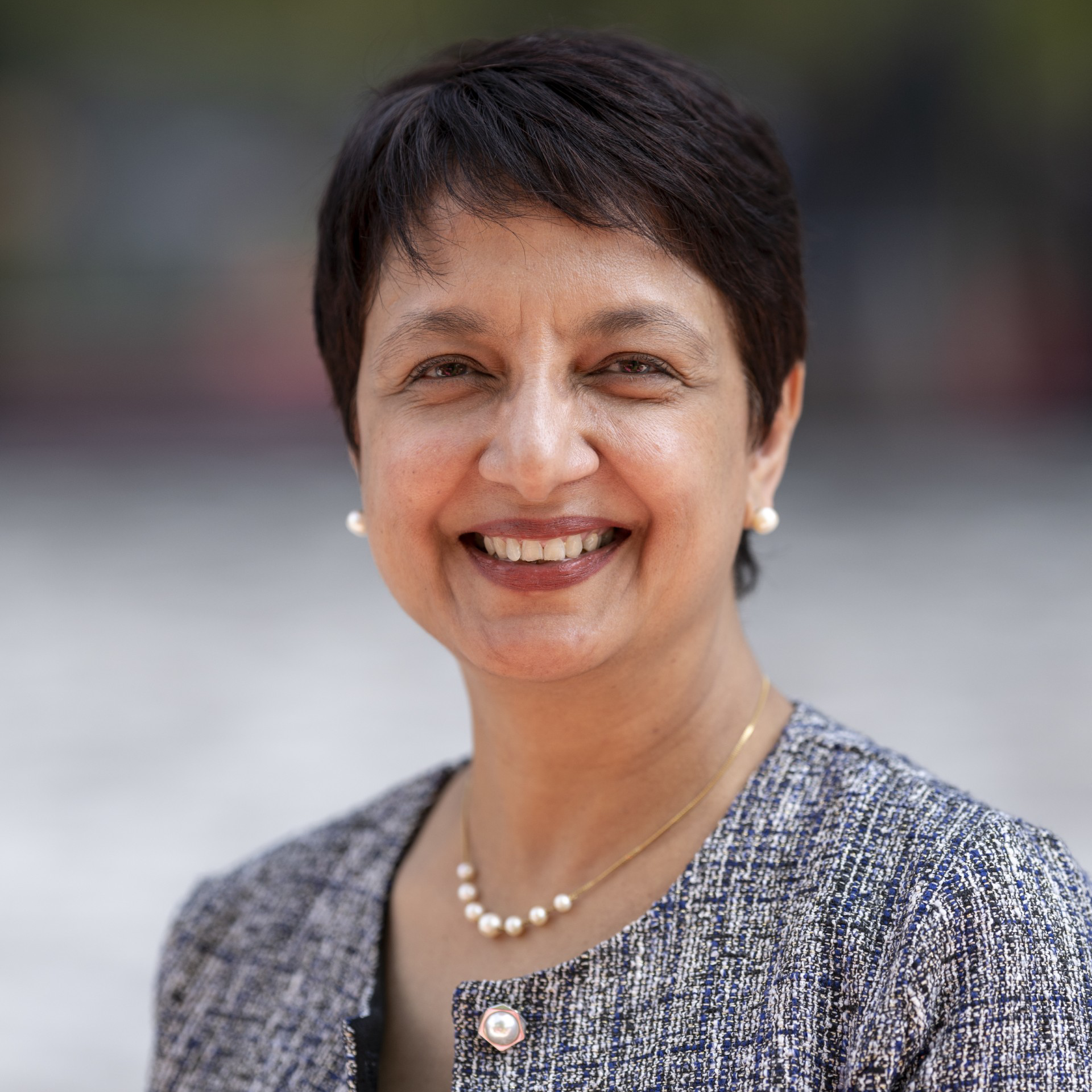
Nidhi Swarup I Chair, Alliance of Patients’ Organizations Singapore (APOS)
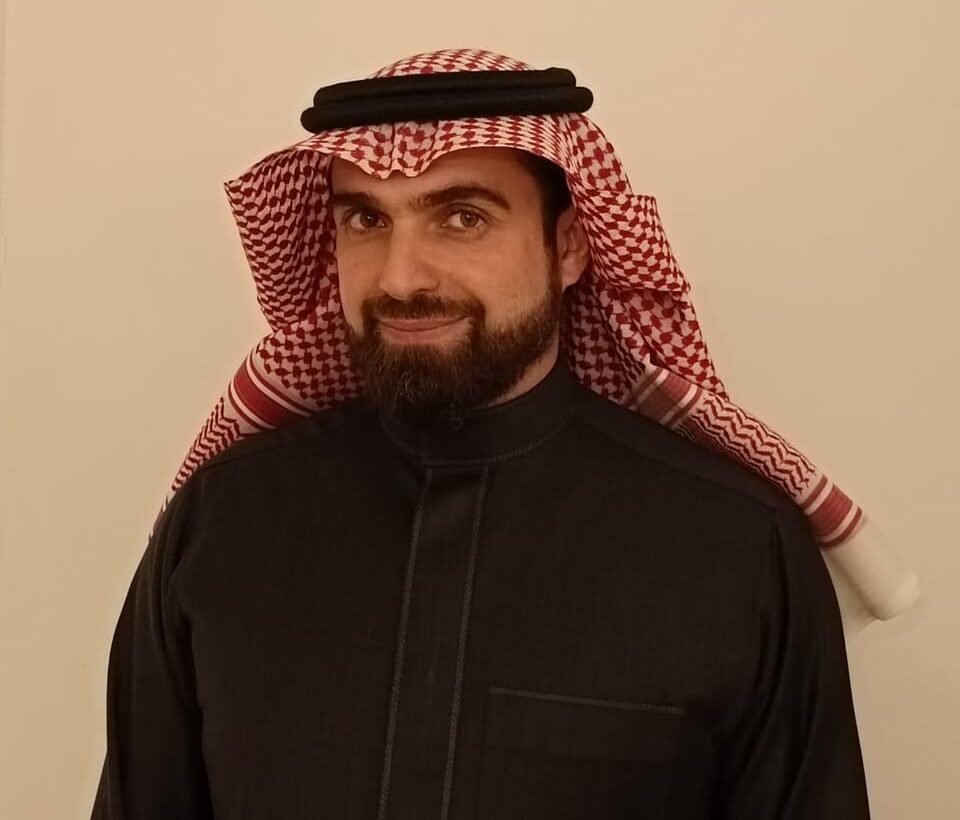
Mohammed A. Omair I Professor at King Saud University, Saudi Arabia
Dr. Karriem Watson | Research Associate Professor University of Illinois
Closing Remarks
Hussain Jafri | CEO | WPA
Welcome and Opening Remarks
Andrew Spiegel, Chair of the WPA Board of Directors, opened the webinar by welcoming participants and placing the discussion within WPA’s broader commitment to patient centered healthcare. He emphasized that a person’s access to care should not be determined by where they live, their socioeconomic position, or the capacity of the local health system around them.
Drawing on experience from the cancer field, he noted that geography can have a direct effect on access to diagnostics, treatment, support services, and outcomes. His remarks set the tone for the webinar by framing equity and access as patient-safety, quality-of-care, and rights-based concerns.
He also highlighted the importance of inclusive participation in global patient dialogue. In this context, the use of multilingual tool (Wordly) by WPA was highlighted as a practical step to support broader accessibility for participants across regions.
Key Presentation
Setting the Context: Equity and Access in Healthcare
Dr. Karriem Watson delivered the overview presentation on equity and access in healthcare. He clarified the distinction between equality and equity. Equality means offering the same resources or support to everyone. Equity requires a deeper understanding of people’s different circumstances and the removal of barriers that prevent them from receiving appropriate care.
He explained that healthcare access is shaped by many factors beyond the availability of hospitals or clinics. These include transportation, cost, language, culture, health literacy, system complexity, and trust. He also noted that access includes the ability to receive information, participate in research, and benefit from health systems that are relevant to local communities.
A central message of the presentation was that health systems often design services for patients, but not with patients. This can result in services that do not reflect lived experience, daily realities, or the practical barriers faced by underserved populations. Dr. Watson stressed that patient engagement should begin early and should inform research, service design, outreach, and care delivery.
The presentation also addressed trust. Dr. Watson emphasized that trust should not be demanded from patients. It must be earned by building trustworthy systems. This requires listening to communities, ensuring representation, recognizing past and current barriers, and creating spaces where patient voices are taken seriously.
He further highlighted the value of community-engaged care and research. Bringing services closer to patients, working with community organizations, and meeting people where they are can help reduce barriers and improve participation. These approaches are especially important for communities that have historically been excluded from care, research, or decision-making.
Key Insights from the Presentation
– Equity is different from equality. It requires tailored support based on patient needs and circumstances.
– Access includes services, information, education, diagnostics, medicines, research participation, and continuity of care.
– Underserved communities are often excluded because systems do not actively reach or involve them.
– Trust is built through trustworthy systems, patient listening, community engagement, and representation.
– Healthcare systems should be designed with patients, not only for patients.
– Community partnerships can help bring care, information, and support closer to the people who need them.
Panel Discussion
The panel discussion, moderated by Edmund Lau, explored how access barriers affect different patient communities and health conditions. The discussion connected broad equity principles with practical experiences from thalassemia, chronic diseases, inflammatory bowel disease, autoimmune and rheumatic conditions, and underserved communities.
Access, Location, and Trust
Dr. Karriem Watson emphasized that physical access remains one of the most visible barriers to healthcare. Specialized services are often located far from the communities that need them most. This creates long and difficult journeys for patients, especially for those in rural or underserved areas.
He also highlighted delays caused by shortages of specialists and uneven distribution of services. These gaps can affect early diagnosis, timely treatment, and long-term care. Dr. Watson suggested that health systems should consider approaches that bring care closer to communities, including satellite clinics, community-based services, and home visits where feasible.
He returned to the issue of trust and stressed that patients are more likely to engage with health systems when they feel heard, respected, and included. Shared decision-making was presented as an important part of this process. Patients should be supported to understand their options and take part in decisions that affect their care.
Access Challenges for People Living with Thalassemia
Sangeeta Wadhwa highlighted the major access challenges faced by people living with thalassemia, particularly in resource-constrained settings. She explained that regular access to safe blood remains a serious concern. Shortages of blood and limited awareness about voluntary blood donation can disrupt essential transfusion care.
She also raised concerns about the availability and safety of screened blood. Inadequate screening for infections can place patients at serious risk. She further noted that access to essential medicines, including iron chelation therapy, remains difficult for many patients, especially when public health systems are unable to ensure regular supply.
Her contribution showed that access is not a single issue. For patients with thalassemia, it includes blood safety, medicine availability, screening, diagnosis, affordability, specialist care, and long-term follow-up. Gaps in any of these areas can affect survival, quality of life, and continuity of care.
Chronic Conditions, Research Gaps, and Peer Support
Nidhi Swarup discussed the barriers faced by people living with chronic conditions, with particular attention to gaps in research, diagnosis, and long-term care. She noted that many studies and clinical trials are concentrated in Western settings. This can limit the relevance of evidence for Asian populations and other underrepresented communities.
She explained that some conditions may present differently across populations. When regional evidence is limited, symptoms may be missed or misunderstood, which can delay diagnosis and lead to inappropriate management. She used chronic conditions, including Crohn’s disease, to illustrate how health systems may not fully recognize the lived experience of patients in different contexts.
She also emphasized that healthcare systems often focus on visible or measurable symptoms while overlooking pain, fatigue, mental health concerns, and quality-of-life issues. These concerns may be difficult to measure, but they are central to the patient experience.
Nidhi also stressed the role of patient organizations and peer support networks. These groups help patients navigate care, understand their condition, access practical information, and receive emotional support. Her remarks reinforced the need to formally recognize patient organizations as important partners in health systems.
Delayed Diagnosis and Specialist Access in Rheumatic Diseases
Dr. Mohammed A. Omair highlighted the challenges faced by patients with autoimmune and rheumatic diseases. He explained that many of these conditions begin with mild or non-specific symptoms, such as pain or fatigue. As a result, patients may live for years without a clear diagnosis.
He noted that limited awareness among patients and primary healthcare providers can contribute to delays. Patients may also be uncertain about which specialist to consult. At the same time, shortages and uneven distribution of rheumatologists mean that access to specialized care is often shaped by geography.
Dr. Omair explained that many rheumatic diseases do not have simple screening tools. Diagnosis may require clinical assessment, imaging, and laboratory investigations. These requirements can create additional access challenges, especially in areas where specialist services are limited.
He also referred to conditions such as ankylosing spondylitis and fibromyalgia to show how symptoms can be misunderstood or overlooked. His remarks underlined the importance of awareness, timely referral, appropriate support services, and patient-centred disease management.
Q&A Session
The Q&A session brought together several cross-cutting concerns. One issue was long waiting times, which affect patients in both low-resource and high-income settings. Speakers noted that waiting times are often linked to system capacity, referral pathways, triaging, and shortages of health professionals.
The discussion also addressed the need for better patient guidance. Low awareness can lead patients to delay care, seek care at the wrong point in the system, or use emergency services when earlier support may have been more appropriate. Clear information and navigation support were identified as important elements of access.
Participants also discussed the role of technology, including tele-support and AI, as possible tools to improve efficiency and patient guidance. The discussion recognized that technology can support access, but it should be used carefully and in ways that remain inclusive, patient-centred, and responsive to local realities.
Another issue raised was stigma, particularly for visible, chronic, or poorly understood conditions. Speakers emphasized the importance of culturally sensitive care, inclusive training, and better representation of diverse patient experiences in healthcare systems.
Key Takeaways
– Equity requires health systems to identify and remove barriers that affect different patients in different ways.
– Access must be understood broadly. It includes affordability, distance, information, diagnostics, medicines, specialist care, trust, research participation, and continuity of care.
– Health systems should be designed with patients and patient organizations from the beginning, not only after services are already developed.
– Patient organizations provide practical support, peer connection, community insight, and evidence that can inform better policy and service design.
– Trust is a core requirement for equitable healthcare. It is built through respectful engagement, representation, listening, and reliable systems.
– Delayed diagnosis remains a major access issue across chronic, rare, autoimmune, and complex conditions.
– Technology can support access and patient guidance, but it should not replace inclusive, human-centred care.
– Fair access requires collaboration between patients, patient organizations, healthcare professionals, researchers, health authorities, and policymakers.
Closing Remarks
Dr. Hussain Jafri, CEO of the World Patients Alliance, closed the webinar by emphasizing that healthcare access is broader than service availability. It also includes affordability, trust, continuity, timely diagnosis, and the ability of patients to participate meaningfully in decisions that affect their care.
He reiterated that patients must be recognized as active partners in shaping health systems and policies. He highlighted that barriers such as cost, distance, lack of information, and system complexity must be addressed if healthcare systems are to become more equitable and responsive.
Dr. Jafri reaffirmed WPA’s commitment to promoting patient-centred approaches, strengthening patient voice, and supporting global collaboration on fair access to quality healthcare.
Conclusion
The webinar highlighted that equity and access are central to safe, fair, and people-centred healthcare. The discussion showed that barriers to care are often interconnected. Cost, geography, diagnosis delays, shortage of specialists, limited awareness, lack of trust, poor representation in research, and weak continuity of care can all affect whether patients receive the care they need.
The session also emphasized that patient organizations are essential partners in addressing these barriers. They help identify real patient needs, support communities, strengthen awareness, collect lived-experience evidence, and engage with health authorities on practical improvements.
For WPA, the webinar reinforced the importance of keeping patient voices at the centre of equity and access discussions. Meaningful progress depends on health systems that listen to patients, work with communities, and treat access as a shared responsibility across policy, service delivery, research, and advocacy.


great webinar, thank you