

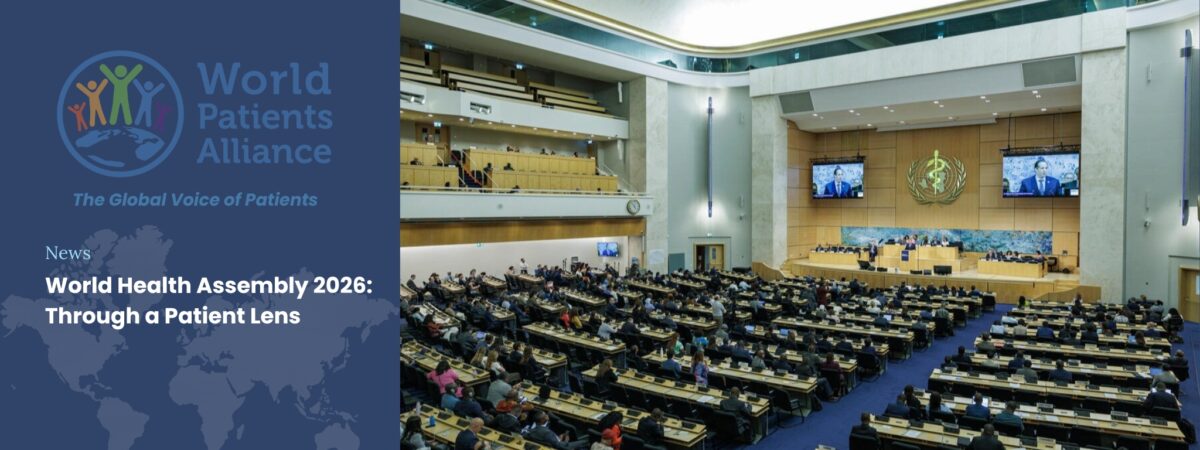
The Seventy-ninth World Health Assembly (WHA79) took place from 18–23 May 2026 in Geneva, Switzerland, bringing together Member States, WHO leadership, global health partners, civil society, and other stakeholders to review progress and agree on priorities for global health.
From the perspective of the World Patients Alliance (WPA), WHA79 was an important moment for advancing patient-centred healthcare, health equity, access to essential services, safer care, stronger health systems, and more accountable global health governance. Many of the resolutions and decisions adopted at WHA79 have direct implications for patients, families, caregivers, and communities across the world.
WHA79 adopted more than 20 decisions and 13 resolutions, below are key WHA79 decisions and discussions that matter most for patients.
Clinical and Care Priorities
Stronger action on stroke prevention, treatment, and rehabilitation
WHA79 adopted the first ever WHA resolution on stroke, titled “Reducing the burden of stroke: strengthening prevention, acute care, rehabilitation and health system readiness”. This is a major step for patients and families affected by one of the world’s leading causes of death and disability.
The resolution calls for stronger action across the full patient pathway: prevention, acute care, rehabilitation, and improved health system readiness. This is particularly important because stroke outcomes depend heavily on timely diagnosis, rapid referral, availability of acute treatment, and access to rehabilitation services.
For WPA, the resolution is a welcome recognition that stroke care must not end at hospital discharge. Patients need integrated services, rehabilitation, psychosocial support, caregiver support, and follow up care that enables recovery, independence, and quality of life.
WPA calls for Member States to ensure that stroke services are embedded in national health plans, linked with primary health care and emergency care systems, and designed around the needs of patients and families.
Recognition of steatotic liver disease as a growing NCD challenge
WHA79 adopted a resolution recognizing steatotic liver disease, formerly known as fatty liver disease, as a major and growing contributor to the global burden of noncommunicable diseases, affecting an estimated 1.7 billion people worldwide.
This is important for patients because liver disease is often under recognized, diagnosed late, and poorly integrated into broader NCD programmes. Steatotic liver disease is closely linked with obesity, type 2 diabetes, cardiovascular disease, and other metabolic conditions, yet many patients remain unaware of their risk until complications develop.
The resolution calls on Member States to include steatotic liver disease (SLD) in national NCD strategies, strengthen primary health care, improve surveillance and awareness, and expand access to prevention, screening, diagnosis, and management, especially for high risk groups, including children and adolescents. It also requests WHO to integrate SLD into NCD efforts, provide technical support, strengthen partnerships, and report regularly on progress within the global NCD agenda.
For WPA, this resolution highlights the need for integrated, not siloed, care. Patients living with metabolic risk factors should have access to prevention, early detection, counselling, appropriate diagnostics, and coordinated care through primary health care systems.
WPA supports the integration of liver health into national NCD strategies, with a strong focus on patient education, prevention, early diagnosis, affordability, and continuity of care.
Health equity for people with haemophilia and other bleeding disorders
WHA79 adopted a resolution on advancing health equity for people with haemophilia and other bleeding disorders.
This is a significant development for a patient community where nearly 70% of individuals globally remain entirely undiagnosed and faced gaps in diagnosis, treatment, and care. In many countries, people with bleeding disorders remain undiagnosed or have limited access to essential treatment, specialist services, and life saving therapies.
Through the resolution, Member States committed to improving access to diagnosis, treatment, and care for people with bleeding disorders, including integration into NCD, primary health care, and maternal health policies. The resolution also encourages timely referral to specialized centres, inclusion of life saving therapies in national Essential Medicines Lists, stronger data collection, and greater awareness to reduce stigma and improve understanding.
For WPA, this resolution is an important step toward closing a long standing equity gap. Every patient with a bleeding disorder should be able to access timely diagnosis, safe treatment, and appropriate follow up care, regardless of where they live or their ability to pay.
WPA calls for implementation to include patient organizations and affected communities, so that national policies reflect lived experience and address real barriers to care.
A post 2030 strategy to end tuberculosis
WHA79 endorsed a decision requesting the WHO Director General to develop a post 2030 tuberculosis strategy, in consultation with Member States and relevant stakeholders, for submission to the Eighty first World Health Assembly in 2028.
The new strategy will guide the future global TB response, taking into account emerging scientific advances, current epidemiological trends, and the need for stronger alignment with primary health care, universal health coverage, and global health security ahead of the 2028 UN High Level Meeting on TB.
This matters greatly for patients because TB remains one of the world’s leading infectious killers, despite being preventable and curable. Although expanded TB treatment saved millions of lives between 2000 and 2024, global targets remain off track due to chronic underfunding, pandemic related disruptions, inequality, conflict, climate related displacement, and vulnerability.
Many patients still face delayed diagnosis, stigma, treatment interruption, financial hardship, and limited access to patient-centred support. The future TB strategy should place patients at the centre of prevention, diagnosis, treatment, adherence support, recovery, and social protection.
For WPA, ending TB requires more than biomedical tools. Patients need respectful care, timely diagnosis, shorter and safer treatment regimens, community engagement, protection from catastrophic health costs, and action on social determinants such as poverty, undernutrition, housing, migration, conflict, and vulnerability.
Renewed commitment to Immunization Agenda 2030
During WHA79, Member States and global health partners reaffirmed their commitment to the Immunization Agenda 2030 (IA2030), recognizing vaccines as one of the most effective, cost effective, and equitable public health interventions.
This is highly important for patients, families, and communities. Immunization protects people from preventable diseases, reduces illness and disability, prevents avoidable deaths, and strengthens health security. However, progress toward IA2030 targets remains off track, with rising measles outbreaks, declining routine immunization coverage in some regions, and widening inequalities in access to vaccines.
For WPA, this discussion is a strong reminder that immunization must remain central to patient-centred health systems. Too many children and communities, especially zero dose and under immunized children, still remain beyond the reach of essential health services. Fragile, vulnerable, and conflict affected settings require particular attention and sustained support.
The discussions also highlighted the growing threat of misinformation, vaccine hesitancy, and declining public trust. Patients and communities need clear, reliable, and evidence based information, delivered through trusted health workers, community leaders, and patient organizations.
WPA welcomes the renewed commitment to IA2030 and calls on Member States to strengthen routine immunization programmes, integrate vaccination into primary health care, invest in community engagement, rebuild vaccine confidence, and ensure equitable access to vaccines across the life course.
Immunization is not only a public health priority; it is a patient safety, equity, and trust issue. No child, patient, family, or community should be left behind when safe and effective vaccines are available.
Patient Safety, Access, and Innovation
Strengthening pharmacovigilance and patient safety
WHA79 adopted a resolution on smart and efficient pharmacovigilance as an essential part of resilient and responsive health systems.
This is highly relevant to patients because medicine and vaccine safety monitoring is a core element of patient safety. Patients and caregivers are often the first to notice adverse reactions, treatment problems, or safety concerns. Their reports should be valued as an important source of evidence.
The resolution recognizes the need to modernize pharmacovigilance systems, improve safety monitoring, strengthen regulatory capacity, integrate patient reporting mechanisms, mandates the use of real world data (RWD) and use digital tools responsibly.
For WPA, this is a major opportunity to make patient reporting easier, more trusted, and more visible. Patients should be able to report medicine and vaccine safety concerns through simple, accessible, and responsive systems. These systems must also provide feedback, build trust, protect privacy, and support transparent communication.
WPA calls for pharmacovigilance systems that are not only technically strong but also patient friendly, inclusive, and trusted by communities.
Equitable access to diagnostic imaging through teleradiology
WHA79 adopted a resolution on strengthening equitable access to diagnostic imaging through teleradiology.
Access to timely and accurate diagnosis is one of the most important issues for patients. In many underserved and remote areas, patients face long delays or must travel far to access imaging services. These delays can affect diagnosis, treatment decisions, outcomes, and costs.
The resolution recognizes teleradiology as a practical way to expand access to expert diagnostic interpretation, especially where radiology specialists are limited. Crucially, it highlights the expanding role of digital health technologies and Artificial Intelligence (AI) in radiology, while stressing the need for strict governance, patient safety, and data protection.
Through the resolution, Member States agreed to integrate teleradiology into national health and digital health strategies, strengthen capacities and infrastructure, and promote collaboration, while WHO will provide guidance and technical support, especially for developing countries and underserved settings.
For WPA, teleradiology can support more equitable access, but it must be implemented safely and ethically. Patients must be protected through strong clinical oversight, data privacy, quality standards, appropriate referral pathways, and clear communication of results.
Digital health solutions should reduce inequities, not create new ones. Patients in rural, remote, low resource, and underserved settings must be among the first to benefit.
Precision medicine with equity at the centre
WHA79 adopted a resolution on precision medicine, highlighting its potential to support more targeted, personalized, and effective care.
Precision medicine is already improving outcomes in areas such as cancer and rare diseases. However, major global inequities remain. Populations in developing countries are still significantly underrepresented in genomic databases and research datasets. If this gap is not addressed, precision medicine could deepen existing health inequalities and widen the global health divide.
The resolution requests WHO to assess existing guidance, consider developing a global strategy, provide technical support, build country capacity, support country readiness assessments, and promote international collaboration for ethical, sustainable, and equitable implementation.
For patients, the promise of precision medicine must not be limited to those who can afford advanced testing or live in health systems with strong laboratory capacity. It must be guided by fairness, affordability, ethical data use, informed consent, privacy, and meaningful public engagement.
WPA welcomes the emphasis on equity and universal health coverage. Precision medicine should be developed as part of people-centred health systems, with clear attention to access, affordability, transparency, and patient rights.
Radiation and health: protection, preparedness, and safe medical use
WHA79 adopted the first comprehensive WHA resolution on radiation and health, covering both ionizing and non-ionizing radiation. Radiation technologies are life saving clinical tools, particularly in medical imaging, radiotherapy, and radiopharmaceuticals, but they require strong safety infrastructure, quality assurance, and appropriate workforce training.
Through this resolution, Member States commit to strengthening radiation protection systems, including exposure monitoring, risk management, workforce capacity, and the safe and equitable use of radiation related health technologies. The resolution also draws particular attention to the high biological vulnerability of children and pregnant women to radiation exposure.
This has direct implications for patients, particularly in relation to diagnostic imaging, cancer treatment, occupational and environmental exposure, and emergency preparedness. Radiation emergencies can also cause serious psychosocial harm, requiring long term mental health and community support.
The resolution calls for stronger global coordination and requests WHO to map key actors, initiatives, roles, and gaps in radiation and health to advance radiation protection and emergency preparedness. Progress will be reported to the WHA in 2028.
For WPA, the patient perspective is clear: patients must have access to safe, appropriate, and high quality radiation related services while being protected from unnecessary exposure and avoidable harm.
Patients should also receive clear and understandable information about the benefits, risks, and safety measures when radiation related procedures are used.
Health Systems, Equity, and Global Governance
Integrated emergency, critical, and operative care
WHA79 approved the Global Strategy for Integrated Emergency, Critical and Operative Care (ECO) 2026–2035, providing a roadmap for countries to strengthen health systems and deliver timely, affordable, and quality ECO services across all levels of care.
For patients and families, emergencies are often the moment when health systems are tested most severely. Delays in recognizing serious illness, lack of referral systems, shortages of trained staff, limited equipment, and fragmented care can result in preventable harm and avoidable deaths.
Conditions addressable by ECO span all major health areas, encompass the top global causes of death and disability, and account for an estimated 38 million deaths and 1.3 billion disability adjusted life years annually. Effective ECO services are also essential during outbreaks, conflicts, disasters, and climate related emergencies.
The strategy provides an opportunity to strengthen timely, affordable, and quality emergency, critical, and operative care across the health system. WHO will also develop an action plan with targets for implementation of the strategy by the end of 2026.
For WPA, implementation must focus on the patient journey: rapid access, early recognition of serious illness, respectful communication, informed decision making, safe referral, continuity of care, rehabilitation, and safe transitions between services.
Emergency, critical, and operative care should be integrated with primary care, hospital care, rehabilitation, and community follow up, so that patients receive the right care at the right time, regardless of where they live or their ability to pay.
Updated global action plan on antimicrobial resistance
WHA79 approved the updated Global Action Plan on Antimicrobial Resistance (GAP-AMR) 2026–2036. The updated plan was developed through a consultative process led by the Quadripartite organization, FAO, UNEP, WHO and WOAH, with extensive engagement of Member States and stakeholders across sectors.
AMR is a direct threat to patients everywhere. It can make common infections harder to treat, increase the risks of surgery and cancer treatment, prolong hospital stays, raise health costs, and lead to avoidable deaths.
The GAP-AMR 2026–2036 aims to preserve the effectiveness of antimicrobials for treating infections in humans, animals, and plants by promoting equitable access, appropriate use, infection prevention, One Health collaboration, sustainable financing, strong governance, and accountability. By 2030, the plan seeks to support the achievement of the 2024 UN General Assembly target of a 10% reduction in bacterial AMR associated deaths in humans, while also reducing antimicrobial use in agrifood systems and minimizing environmental pollution from resistant microbes and antimicrobial residues.
For WPA, AMR must be understood as both a public health and patient safety crisis. Patients need access to effective antibiotics when clinically needed, but they also need protection from inappropriate use, unsafe prescribing, poor infection prevention, and misinformation.
Patient education, shared decision making, infection prevention, vaccination, clean healthcare environments, and responsible use of antimicrobials must be central to national AMR responses.
Health at the heart of economic policy
WHA79 adopted the Strategy on the Economics of Health for All 2026–2030. This is important because patients experience the consequences of economic policy every day: whether care is affordable, whether medicines are available, whether primary health care is funded, whether health workers are supported, and whether families are protected from catastrophic health spending.
The strategy places people, wellbeing, and equity at the centre of economic and financing decisions, aiming to integrate health into fiscal, economic, and industrial policies while supporting sustainable financing for universal health coverage. Member States emphasized the need to invest in resilient health systems, essential public goods, and well being oriented economies, supported by stronger evidence and technical capacity for better engagement with financial and economic sectors.
For WPA, this is a welcome direction. Health spending should be seen as an investment in people, communities, and sustainable development. Universal health coverage cannot be achieved without sustainable financing, financial protection, and investment in essential services.
Patients should not be pushed into poverty because they need care.
Reforming the global health architecture
WHA79 agreed to establish a Member State led, WHO hosted joint process, with global health partners, to support reforms of the global health architecture.
The process will develop options and recommendations for reform so that the global health architecture better meets the specific and collective needs of countries and communities, while maximizing access, impact, and equity.
This is particularly important at a time when global health faces increasing fragmentation, financing constraints, overlapping initiatives, duplication, power imbalances, and growing inequities. Patients and communities often experience this fragmentation directly when global commitments do not translate into coordinated national action, timely services, affordable care, or equitable access to essential health interventions.
WHA79 also recognized WHO’s central convening and normative role, while emphasizing that reform should include meaningful engagement of key stakeholders, including civil society and youth.
For WPA, reform of the global health architecture must not be limited to institutional efficiency. It must also strengthen accountability to people and communities. Patients, caregivers, youth, civil society, and community organizations must be meaningfully engaged in reform processes.
Global health architecture should support country ownership, equity, access, transparency, and patient-centred implementation. Reforms should ultimately be judged by whether they improve the lives of patients and communities, especially those who are underserved, marginalized, or left behind.
Indigenous Peoples’ health and inclusive health systems
WHA79 considered the draft global plan of action for the health of Indigenous Peoples and decided to defer its consideration to WHA80 in 2027 to allow further consultations with Member States, Indigenous Peoples, relevant UN and multilateral agencies, civil society, academic institutions, and other stakeholders.
This is an important area for patient equity. Indigenous Peoples in many contexts face barriers to healthcare, discrimination, cultural exclusion, geographic isolation, poorer health outcomes, and insufficient recognition of traditional knowledge and community led approaches.
For WPA, future work must be grounded in meaningful consultation, respect for Indigenous leadership, culturally safe care, data sovereignty, and the right of communities to shape health policies that affect them.
Patient-centred care must also be culturally respectful care.